.png?width=552&height=414&name=Choosing%20a%20Math%20Curriculum%20(2).png)
The Case for Strong Elementary Math Foundations
Strong elementary math foundations begin with understanding, not memorization.
When students move from hands-on...

Schools are placing more focus on STEM than ever before. That makes a lot of sense in today's world. Students need strong skills in science, technology, engineering, and math. They also need to solve problems, think clearly, and work together.
That makes for a big responsibility for teachers.
So it's no wonder many educators are searching for STEM education resources for teachers that are engaging, standards-based, and easy to use.
But the main challenge is not finding materials. There are seemingly millions of them out there. The real problem is choosing the right materials.
This guide explains why strong STEM materials matter, what to look for, and how to choose the best STEM materials that support learning in your classroom.
STEM learning helps students build skills they will use for life. It teaches them how to ask questions, test ideas, and learn from mistakes. It also prepares them for future careers.
Research supports this. A recent study found that students taught with STEM-based methods were more creative and better at critical thinking than students taught with traditional methods.
Teachers understand how valuable STEM teaching is, and they want to provide strong instruction. But they face real challenges.
They must support different learning needs. They need to meet NGSS or state standards, or both. And they need to do all this while engaging learners in a world full of digital distractions.
Strong STEM education resources help make this possible.
The market for STEM education resources for teachers is crowded. Some look exciting but lack depth. Others match standards but fail to spark curiosity.
That is why choosing the right STEM education resources matters. The right materials will support both learning goals and student engagement.
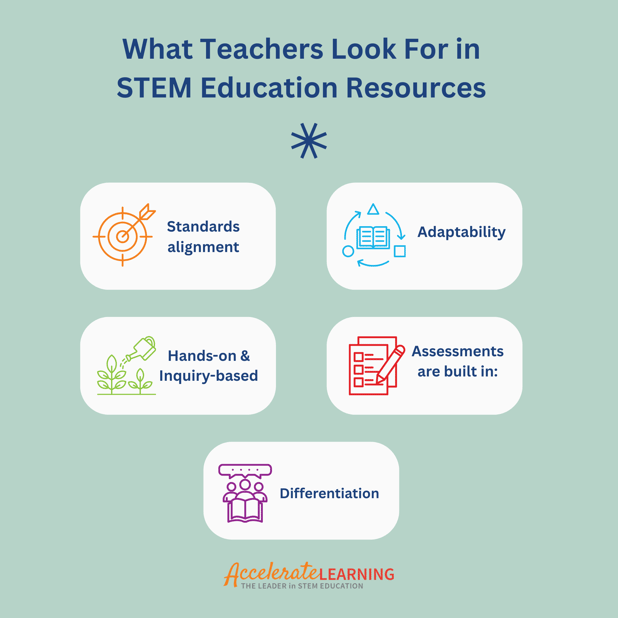
Just because it looks good on a website does not mean it will work well in the classroom. Before you commit to a STEM teaching resource, it helps to have a checklist of criteria.
Here are some key elements to look for when evaluating the best STEM resources for teachers:
Standards alignment: Is the resource NGSS/state standard aligned?
Adaptability: Does it work across grade levels? This is important for differentiation.
Hands-on & Inquiry-based: Look for science materials that ask students to investigate, build, test, or solve. Not just read, write, or answer questions.
Assessments are built in: The best STEM resources include ways to check student understanding. A variety of data collection methods should be included.
Differentiation: Should support all learners, including ELL and SPED.
Common types of quality STEM resources include:
Clear criteria help schools select materials with confidence, and classrooms benefit from having a variety of resources available.
Most classrooms will use more than one type of STEM education resources for teachers. The key is knowing when to use which type.
Digital platforms work well when you need a full, connected curriculum. Good STEM platforms remove the need to piece together materials from different sources. They often include lessons, videos, assessments, and reporting tools in one place.
So teachers get a structured sequence with built-in supports already included.
STEMscopes Science is a digital-first curriculum covering science instruction from kindergarten through 12th grade. Lessons include digital and print-ready materials, interactive activities, and built-in assessments. STEMscopes Math follows the same approach for math, moving students from hands-on work toward more abstract thinking.
Look for platforms that plug into your existing learning management system. Assessments, differentiation tools, and student data should all live in one place.
Physical kits give students something to touch, build, and test. That direct experience helps learning stick in ways screens alone can't replicate.
When reviewing kits, look for:
The best STEM kits for classrooms connect hands-on tasks to clear learning goals.
Free and low-cost tools can strengthen instruction without stretching your budget.
Examples include:
These STEM education resources for teachers work best paired with a structured curriculum. They fill gaps and give students more ways to engage with the content.
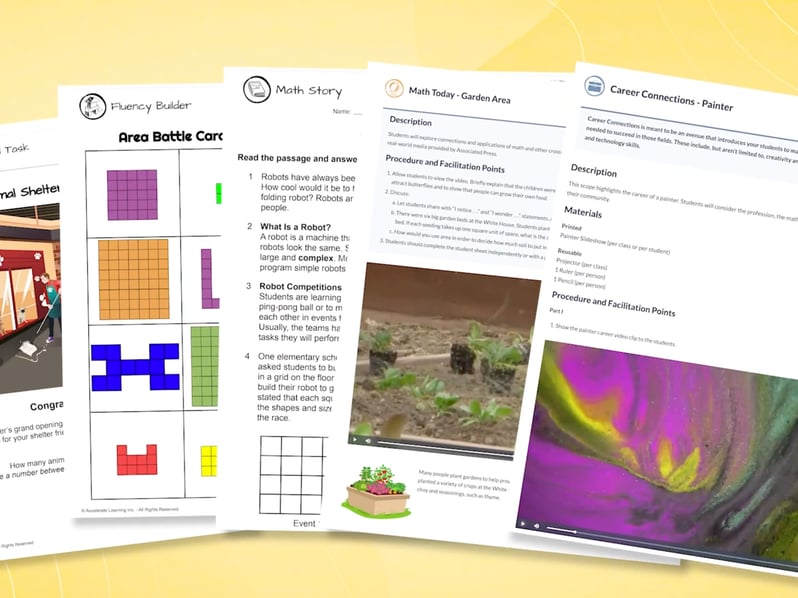
Even strong materials should be reviewed carefully. A little extra vetting up front saves a lot of wasted class time later. Here's how to approach it.
Start with peer recommendations. Colleagues often share honest feedback about what works. Educator forums and Facebook groups are also good places to hear honest feedback from people in classrooms like yours. These insights reveal patterns that marketing materials may not show.
Check independent reviews. Sites like EdReports offer straightforward reviews of classroom curriculum. Look for feedback that speaks to real classroom use, not just features.
Pilot before you commit. Pick one unit or one lesson and test it with a small group before rolling it out to everyone. Watch how students respond. Note where they get stuck. That classroom data tells you more than any product description.
Plan with your team. The best STEM education resources get stronger when teachers use them together. Grade-level teams and departments can split the vetting work, share what they learn, and build a shared bank of materials that everyone trusts.
Classroom teachers don't have to evaluate STEM teaching resources on their own. The more teachers share what they find, the stronger everyone's instruction gets.
Instructional materials are only part of the picture. Teacher development matters just as much.
The National Institute for STEM Education (NISE) supports educators through online certification programs. These programs are competency-based and focus on improving classroom practice.
At the center of the programs is the 15 STEM Teacher Actions framework. Teachers reflect on their instruction, collect evidence, and build a professional portfolio. Coaching supports growth.
Educators can earn graduate credit and access university-aligned programs as part of the process.
Professional certification complements classroom tools. The goal is to build teacher capacity and support a school-wide STEM culture, not add another training to the calendar. Strong instruction starts with confident, well-supported teachers.
The best STEM activities connect to real-world problems, get students working together, and give teachers clear learning goals to aim for. The three project-based STEM activities below reflect inquiry-based, hands-on learning that works across grade levels. Teachers can adjust the complexity up or down depending on where their students are.
|
Activity |
Science Area |
Hands-On Element |
Grade Adaptability |
|
Decomposition Investigation |
Environmental Science |
Burying and observing materials over time |
Elementary through middle school |
|
Earthquake-Proof Building Challenge |
Earth Science / Engineering |
Building and testing structures on a shake plate |
Upper elementary through middle school |
|
Simple Circuits Challenge |
Physical Science |
Building circuits and testing conductors |
Upper elementary through high school |
Driving question: How long does it take different materials to break down?
Driving question: Can you build a structure that survives an earthquake?
Driving question: Which materials allow electricity to flow?
All three activities put the thinking in students' hands. Teachers using student-centered instructional strategies will find these fit naturally into an inquiry-based classroom. Each one can be adjusted for different grade levels and settings.
Several major trends are shaping how schools select STEM education resources.
AI tools support personalized learning. They are able to provide personalized practice and feedback to each student. Teachers should look for STEM resources that support learning without replacing hands-on investigation.
Career-connected STEM is also growing. Students benefit when lessons connect to real industries and local problems they see in their own communities.
Blended instruction combines digital tools with physical materials. The best STEM resources for teachers support both formats.
Another major trend is cross-disciplinary learning. Helping students see connections across subjects helps them learn more and be more engaged.
Computational thinking now appears in different learning areas as well.
When reviewing the STEM teaching resources that will best support the learners in your school, you should look for materials that reflect these trends while staying aligned to standards.
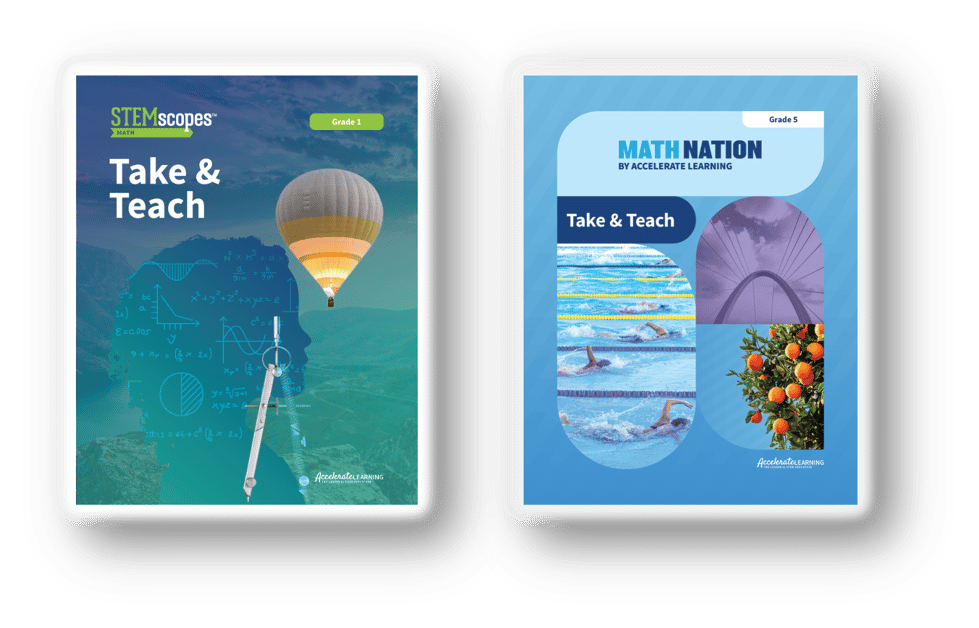
Schools seeking the best STEM materials for classrooms often look for curricula that combine digital instruction, hands-on materials, and assessment tools.
STEMscopes is one example of this. It provides:
These features make STEMscopes a strong option for teachers looking for their next STEM curriculum.
Strong STEM instruction requires thoughtful planning and careful selection of tools. With the right STEM education resources for teachers, schools can support creativity, critical thinking, and deeper engagement across classrooms.
Strong elementary math foundations begin with understanding, not memorization.
When students move from hands-on...

As Back-to-School kicks into gear, we’re highlighting how to build great STEM classrooms and set your school year up...

The strongest start to a STEM school year isn’t about decorating a classroom or creating a perfect syllabus.
It comes...


