
.png?width=552&height=414&name=Choosing%20a%20Math%20Curriculum%20(2).png)
The Case for Strong Elementary Math Foundations
Strong elementary math foundations begin with understanding, not memorization.
When students move from hands-on...

Students are more likely to engage in math when they feel like they belong. A strong math community helps learners share ideas, learn from mistakes, and build confidence in their abilities.
This environment is built on purposeful actions and strategies, emphasizing that math is a subject everyone can excel in and enjoy. It's about setting up a classroom where students work together, share ideas openly, and see math as a positive and collective experience.
Creating such a classroom requires careful planning, clear communication, and a focus on building confidence and cooperation among students.
This approach helps to establish a learning space where students are encouraged to participate, ask questions, and support each other's understanding of math. It's also a part of the recipe for an effective math classroom.
Let's delve into how teachers can foster this kind of inclusive and supportive math classroom, ensuring every student feels included and engaged from day one.
In this blog, we’ll break down:

A math community is more than a positive classroom atmosphere or a few posters on the wall. It is a place where learners share ideas and explain their thinking. They ask questions and learn from different approaches.
This kind of environment does not happen by accident. Teachers build it through:
In these classrooms, students see math as something they build together with their peers, not just something taught by teachers and textbooks.
A strong classroom math community helps learners feel safe sharing their thinking and making mistakes. Over time, students begin to see themselves as capable mathematicians whose ideas matter.
A strong math community changes how students experience math class each day. When learners feel like they belong, they are more willing to contribute ideas, work through challenging problems, and stay engaged after making mistakes.
That matters because many students decide early that they are “not math people.” Once that belief takes hold, students often pull back from classroom discussions. They stop seeing themselves as capable of success in math.
A strong community in the classroom helps interrupt that pattern. As learners hear different strategies and see classmates reason, math starts to feel more accessible. Students begin to understand that struggling with a problem is part of learning, not proof that they cannot do it.
This also matters for equity in the classroom. Not every student communicates thinking in the same way. Some learners prefer speaking while others feel more comfortable writing or drawing models to explain their ideas.
A strong math community creates space for different forms of participation so more students can meaningfully engage with the mathematics.
Over time, students build confidence in their math skills and in their ability to contribute to the class as a whole.

A strong math community is built on classroom norms. Before students can contribute to a community in the classroom, they need to know what it looks and sounds like. Without shared norms, even strong math activities can fall flat. That's why classroom culture needs to come before activities.
Strong teachers work together with their students to build classroom expectations. This helps students build ownership and feel more invested during discussions and group work.
"As learners hear different strategies and see classmates reason, math starts to feel more accessible. Students begin to understand that struggling with a problem is part of learning, not proof that they cannot do it."
Some of the most important norms in a strong community in the classroom include:
Effective teachers not only set up norms at the beginning of the year. They also reinforce and model them every day. The way they respond to wrong answers, guide discussions, and highlight student thinking shapes how safe students feel participating in math.
Community building activities are important. But activities alone do not create a strong classroom culture. A Math community develops in the classroom as students practice the habits and behaviors that shape a classroom culture over time.
The best activities:
"When teachers consistently invest in classroom culture, students are more likely to feel confident in math class."
Over time, these experiences help students become more comfortable contributing ideas and learning with their peers.
Here are a few math community building activities that help create that kind of classroom environment.
Number talks are one of the simplest math community building activities teachers can use throughout the year.
After giving a math question, teachers record student strategies without ranking one method as “best.” This allows learners to contribute without the pressure of getting “the right answer.” Over time, students also become more comfortable sharing unfinished thinking.
Math talks are fun math warm-ups that help students build confidence over time.
Collaborative problem-solving tasks are some of the strongest math community building activities. That’s because students need to rely on one another throughout the process which makes every student's contribution matter.
Strong tasks:
Explore activities in the STEMscopes Math curriculum support this kind of hands-on collaboration through prompts for mathematical discourse and student reasoning.
In a strong math community, student work is more than classroom decoration. It becomes part of the learning process. Using their work, students can compare strategies and learn from one another's thinking.
Teachers can use think-pair-share, gallery walks, and group presentations to structure those conversations.
These structures also make it easier for more students to participate. Some learners may feel more comfortable speaking. Others may prefer writing, drawing models, or sharing ideas with a partner first. When teachers offer different ways to contribute, more students engage in the learning process.
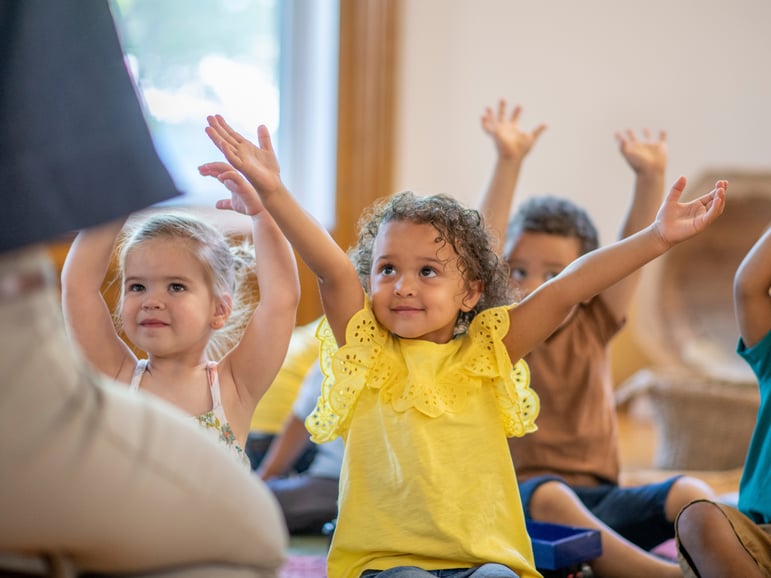
A strong math community looks different at each grade level. As students grow, their relationship with math changes, and so do the strategies teachers use to build confidence, participation, and belonging.
Here are a few examples of how math community building activities can support learners at different stages.
In elementary classrooms, the goal is to help students see math as something they do together. This is also when many learners begin forming beliefs about whether they are “good at math.”
Math community building activities that work well at this level include:
At this age, it is especially important to celebrate effort, persistence, and growth. When students see that mistakes and discussion are part of learning, they are more likely to develop a positive math identity. The best math curriculum for elementary students includes many opportunities for students to build confidence through collaboration and shared problem-solving.
Middle school students want both independence and a sense of belonging. A strong community in the classroom helps provide both. Students have opportunities to contribute their own ideas while also seeing how their thinking supports the learning of the group.
Strategies that work well at this level include:
Math anxiety often increases during the middle school years. Community structures like these help students see that struggling with a problem is a normal part of learning.
In high school, a strong math community helps students tackle more complex problems together. Community-building often shifts toward peer study groups, math labs, and student-led presentations. These give learners opportunities to explain ideas, challenge thinking, and learn from one another.
Collaboration becomes even more meaningful when students can connect math to authentic problems. As students apply math to real-world situations, they begin to see its value beyond the classroom. Programs built around real world math and problem-based learning create opportunities for this kind of collaboration.

Building a math community at the beginning of the year is one thing. Maintaining it throughout the year is another.
Students need regular opportunities to reflect on what they learned and how they worked together. These conversations help keep classroom norms visible. They remind students that they are responsible for the success of the group, not just themselves.
Teachers also need to address problems when they arise. When discussions stop being productive or students stop following classroom norms, it is important to revisit expectations and reset as needed.
When teachers consistently invest in classroom culture, students are more likely to feel confident in math class. Wilemon STEAM Academy saw this firsthand. Teachers found that STEMscopes Math Explore activities helped students build confidence and engage more in learning. As one teacher shared, "The Explores build students' confidence so by the time we're ready to go into the other parts of the lesson, they feel ready."
A strong math community is not something teachers build once and move on from. It needs attention throughout the year.
Students are more likely to engage in math when they feel like they belong. They are more willing to contribute ideas, learn from mistakes, and take on challenges.
Over time, they begin to see themselves as capable mathematicians whose ideas matter.
That is why teachers should not view building a classroom community as separate from instruction. When students feel like they belong, they are more willing to engage in the learning process.
If you're looking for more ways to support student participation, persistence, and success in math, the 6 Pillars of Math Confidence guide offers practical ideas and strategies for the classroom.
Strong elementary math foundations begin with understanding, not memorization.
When students move from hands-on...

As Back-to-School kicks into gear, we’re highlighting how to build great STEM classrooms and set your school year up...

The strongest start to a STEM school year isn’t about decorating a classroom or creating a perfect syllabus.
It comes...


