.png?width=552&height=414&name=Choosing%20a%20Math%20Curriculum%20(2).png)
The Case for Strong Elementary Math Foundations
Strong elementary math foundations begin with understanding, not memorization.
When students move from hands-on...

Choosing the best math curriculum for elementary classrooms is more complex than ever.
District leaders and instructional teams aren’t just looking for alignment to standards. They’re evaluating how well an elementary math curriculum builds deep understanding, supports diverse learners, and prepares students for long-term success in mathematics.
From digital-first platforms to print-based programs and blended models, schools have more options than they’ve ever had before. But without clear evaluation criteria, it’s easy to get overwhelmed by choice. What features matter most? Which program suits the students’ needs?
Before comparing programs, it’s important to define what quality actually looks like.
What makes one elementary math curriculum more effective than another, and how can schools determine which approach is best for student growth?
This guide looks at the characteristics of effective elementary math curricula, with practical criteria for evaluating programs in today’s classrooms.
The best elementary math curriculum does more than teach procedures. It builds understanding, problem-solving skills, and confidence.
Students begin learning key math concepts at an early age when STEM education is pivotal. In elementary, it's imperative that research-backed approaches to teaching math are leveraged to ensure students get the most out of their math education.
Math programs need to prioritize hands-on learning, play-based learning and inquiry-based learning in order to make math fun and engaging so that students become confident math learners and can self-identify as being strong and skilled at math.
While schools and their needs can vary, high-quality education programs share these core traits:
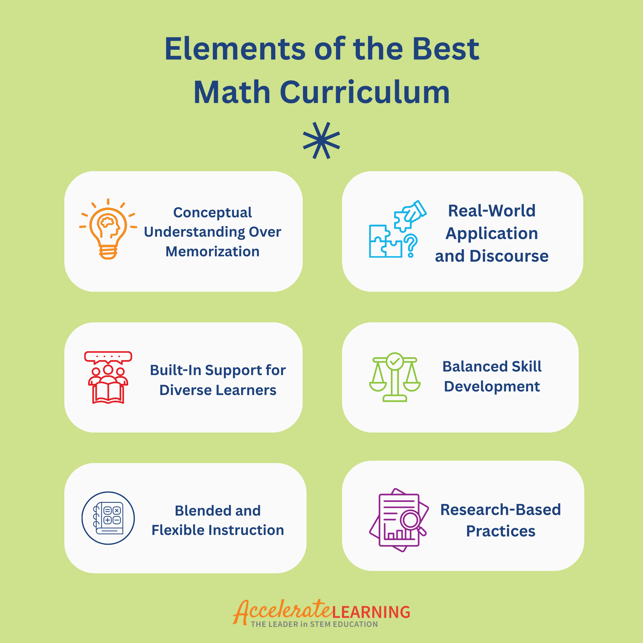
Choosing the best math curriculum for elementary classrooms goes beyond checking standards or comparing brand names.
The right math program builds deep conceptual understanding, supports all learners, and fits naturally into daily classroom instruction.
“Student success in math isn’t just about skills and standards. It’s also shaped by how learners see themselves.”
Start by looking for curricula that prioritize foundational skills, but go beyond procedures.
The best options help students understand why math works.
Lessons that use visual models, manipulatives, and opportunities for students to explain their thinking strengthen retention for long-term success in math.
Real-world problem solving and student discourse are also important.
The best math curricula integrate multi-step problems grounded in authentic contexts, encouraging learners to reason, collaborate, and justify their answers. Connecting math to everyday life helps students see its relevance and apply skills in a more relevant way.
Supporting diverse learners is another essential feature. High-quality programs include built-in scaffolds and intervention pathways, multiple representations of concepts, and flexible pacing. This ensures students of all readiness levels can stay connected to grade-level content.
Finally, blended and flexible delivery enhances engagement. Curricula that combine digital tools, print materials, and hands-on activities give teachers multiple ways to reach learners.
Programs with structured guidance for small-group, whole-class, and independent instruction help maximize the impact of blended learning while keeping lessons manageable.

Elementary schools use a variety of approaches to teach math. Understanding the main types of math curriculum can help educators evaluate options clearly:
“Programs that emphasize exploration, discussion, and visual representations align with how students naturally learn.”
When evaluating elementary math curriculum options, it helps to have clear criteria. High-quality programs vary in approach, but the best elementary math curriculum consistently balances conceptual understanding, skill development, and classroom usability.
Here are the key features to look for:
When comparing elementary math curricula, seek out programs that combine visual models with problem-based learning.
These features work together to deepen understanding, build confidence, and reinforce long-term retention.
One example of a curriculum designed around these principles is Math Nation. It uses a blended approach, integrating digital and print resources to reinforce conceptual understanding while maintaining progression across grade levels.
Learn more about how Math Nation supports both teachers and students.

In today’s classrooms, the best math curriculum for elementary students goes beyond memorization.
Research shows that emphasizing conceptual understanding, visual models, and guided practice supports long-term retention and transfer of learning.
Focusing on conceptual learning supports retention and helps students transfer skills to new situations. Rather than just practicing isolated procedures, students develop strategies they can apply across topics and grades.
This foundation builds readiness for upper-grade math, ensuring learners can tackle more complex concepts with confidence.
Research-backed instructional practices consistently highlight the value of relating to math over rote learning.
Programs that emphasize exploration, discussion, and visual representations align with how students naturally learn, helping them internalize concepts and think critically.
By prioritizing conceptual understanding, schools distinguish modern elementary math curricula from traditional programs that rely primarily on repetition.
This approach strengthens student outcomes and reflects Accelerate Learning’s philosophy of supporting deep, meaningful student growth in math.

Supporting all learners isn’t just good practice. It’s essential for creating classrooms where every child has the opportunity to succeed and thrive in math.
A truly effective elementary math curriculum meets the needs of all students. Programs that provide multiple representations, scaffolded learning, and opportunities for discourse help students at all levels stay engaged.
Flexible pacing and differentiated materials allow teachers to adjust instruction in real-time.
Visual models, hands-on activities, and varied problem-solving approaches help students with different learning styles, language backgrounds, or readiness levels stay engaged and supported.
Equity and inclusion are central to modern elementary math instruction. When curricula are designed with diverse learners in mind, schools can address gaps early, prevent frustration, and make math more fun for students.
Student success in math isn’t just about skills and standards. It’s also shaped by how learners see themselves. Math identity, confidence, and a sense of belonging in the classroom are critical to engagement and achievement.
The best elementary math curriculum helps students view themselves as capable math learners.
Supplemental tools like OnRamp Math are designed to address this need.
OnRamp Math is not a traditional remediation program. It accelerates students toward on-grade-level readiness without forcing them to backtrack extensively.
By targeting specific gaps that prevent students from keeping pace with instruction, it allows learners to rejoin core lessons efficiently while building confidence, collaboration, and foundational understanding.
Programs like OnRamp Math function alongside the core elementary math curriculum, filling gaps and supporting progress in a way that supports student motivation.
When students feel success and see themselves as competent problem solvers, they are more likely to engage actively, take risks, and develop the persistence needed for growth in math.

Modern elementary math instruction emphasizes exploration and multiple ways of representing concepts. The best options balance conceptual understanding with skill development while supporting diverse learners in every classroom.
STEMscopes Math exemplifies this approach. As a comprehensive elementary math curriculum, it prioritizes conceptual understanding, encourages students to explore ideas deeply, and provides opportunities for sense-making.
Lessons incorporate multiple representations, including visual models, hands-on activities, and digital resources, to meet varied learning needs and strengthen understanding across topics.
This blended model combines print materials, digital tools, and interactive experiences, giving teachers flexibility to differentiate instruction and engage students in multiple formats.
STEMscopes Math also aligns with research-backed practices, reinforcing fluency and problem-solving while maintaining a clear progression across grade levels.
It demonstrates how a curriculum can support diverse learners and standards-aligned instruction through exploration and multiple representations.

Ultimately, the best math curriculum for elementary classrooms depends on your school’s goals, student needs, and instructional context.
There isn’t a one-size-fits-all solution. By focusing on conceptual understanding, real-world problem solving, support for diverse learners, and blended instructional models, educators can make informed choices that fit their priorities.
Evaluating programs with these criteria helps schools make informed decisions that align with their priorities.
Thoughtful selection ensures the curriculum enhances learning, builds confidence, and prepares students for future math success, without leaving teachers or administrators overwhelmed by options.
Strong elementary math foundations begin with understanding, not memorization.
When students move from hands-on...

As Back-to-School kicks into gear, we’re highlighting how to build great STEM classrooms and set your school year up...

The strongest start to a STEM school year isn’t about decorating a classroom or creating a perfect syllabus.
It comes...


